
Sound therapy is a powerful tool that has been used for centuries to heal and explore the depths of the human soul. It harnesses the power of sound waves to create a profound impact on our physical, emotional, and mental well-being. Whether it’s through the use of binaural beats, music therapy, meditation, mindfulness, or beat making, sound therapy offers endless possibilities for self-exploration and healing.
Key Takeaways
- Sound therapy uses sound waves to heal and balance the body and mind.
- Binaural beats can enhance meditation and inner exploration.
- Music therapy can be used to heal and explore emotions and experiences.
- Meditation and mindfulness can lead to self-discovery and inner peace.
- Creating your own beats can be a powerful tool for inner exploration and expression.
Understanding Sound Therapy: Healing Through Sound Waves
Sound therapy, also known as sound healing or vibrational medicine, is a holistic approach to healing that uses the power of sound waves to restore balance and harmony within the body. It has been practiced for thousands of years in various cultures around the world, including ancient Egypt, Greece, and India.
The science behind sound therapy lies in the fact that everything in the universe is made up of vibrations. When we are in a state of dis-ease, whether it’s physical, emotional, or mental, our vibrations become imbalanced. Sound therapy works by using specific frequencies and vibrations to bring our bodies back into a state of harmony.
The benefits of sound therapy are vast and varied. Physically, it can help reduce pain, lower blood pressure, improve sleep quality, and boost the immune system. Emotionally, it can help release stress and anxiety, improve mood and emotional well-being, and promote relaxation. Mentally, it can enhance focus and concentration, improve cognitive function, and promote mental clarity.
The Power of Binaural Beats: Enhancing Inner Exploration
Binaural beats are a specific type of sound wave that can be used to enhance meditation, relaxation, and creativity. They work by playing two slightly different frequencies in each ear, which creates a third frequency in the brain called the binaural beat.
The potential benefits of binaural beats are vast. When used during meditation, they can help deepen the meditative state, promote relaxation, and enhance focus and concentration. They can also be used for relaxation purposes, helping to reduce stress and anxiety and promote a sense of calm. In terms of creativity, binaural beats can help stimulate the brain and enhance creative thinking.
There are many different types of binaural beats available, each with its own specific frequency range and intended purpose. For example, theta waves are often used for deep meditation and relaxation, while alpha waves are used for creativity and focus. To use binaural beats, simply find a quiet space, put on a pair of headphones, and listen to the beats for a designated period of time.
Music Therapy: Using Music to Heal and Explore
Music therapy is another powerful form of sound therapy that has been used for centuries to heal and explore the depths of the human soul. It involves using music as a therapeutic tool to address physical, emotional, cognitive, and social needs.
The benefits of music therapy are vast and varied. Physically, it can help reduce pain, improve motor skills, and promote physical relaxation. Emotionally, it can help reduce stress and anxiety, improve mood and emotional well-being, and provide an outlet for self-expression. Mentally, it can improve cognitive function, enhance memory and attention span, and promote mental clarity.
There are many different techniques that can be used in music therapy, depending on the individual’s needs and goals. For example, listening to music can be used for relaxation purposes or to evoke specific emotions. Playing an instrument or singing can be used as a form of self-expression or as a way to improve motor skills. Composing or improvising music can be used as a creative outlet or as a way to enhance cognitive function.
Meditation: A Journey of Self-Discovery
Meditation is a practice that has been used for thousands of years to explore the depths of the human mind and soul. It involves focusing the mind and achieving a state of deep relaxation and inner peace.
The benefits of meditation are vast and varied. Physically, it can help reduce blood pressure, improve sleep quality, and boost the immune system. Emotionally, it can help reduce stress and anxiety, improve mood and emotional well-being, and promote a sense of calm. Mentally, it can enhance focus and concentration, improve cognitive function, and promote mental clarity.
There are many different meditation techniques that can be used, depending on the individual’s needs and goals. For example, mindfulness meditation involves focusing on the present moment and observing thoughts and sensations without judgment. Loving-kindness meditation involves cultivating feelings of love, compassion, and kindness towards oneself and others. Transcendental meditation involves repeating a mantra to achieve a state of deep relaxation.
Mindfulness: Being Present in the Moment
Mindfulness is a practice that involves being fully present in the moment and observing thoughts, feelings, and sensations without judgment. It has its roots in ancient Buddhist teachings but has gained popularity in recent years as a powerful tool for reducing stress and enhancing well-being.
The benefits of mindfulness are vast and varied. Physically, it can help reduce blood pressure, improve sleep quality, and boost the immune system. Emotionally, it can help reduce stress and anxiety, improve mood and emotional well-being, and promote a sense of calm. Mentally, it can enhance focus and concentration, improve cognitive function, and promote mental clarity.
There are many different mindfulness techniques that can be used, depending on the individual’s needs and goals. For example, body scan meditation involves systematically scanning the body for sensations and observing them without judgment. Breath awareness meditation involves focusing on the breath as it enters and leaves the body. Walking meditation involves walking slowly and mindfully, paying attention to each step.
Creating Your Own Beats: A Guide to Beat Making
Beat making is the process of creating music by layering different sounds and rhythms together. It can be done using various instruments, software, or even just your voice. Beat making is a powerful tool for self-expression and creativity, allowing individuals to explore their inner world and create something unique.
The potential benefits of beat making are vast. It can help reduce stress and anxiety, improve mood and emotional well-being, and provide an outlet for self-expression. It can also enhance cognitive function, improve focus and concentration, and promote mental clarity.
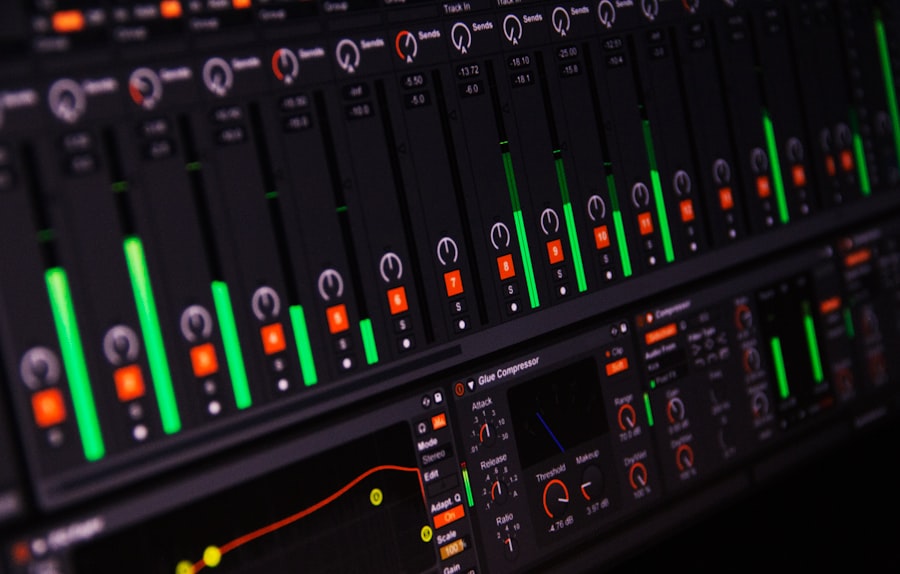
There are many different beat making software programs available that can be used to create your own beats. Some popular options include Ableton Live, FL Studio, and Logic Pro. These programs allow you to manipulate sounds, add effects, and create unique compositions.
Using Beat Making for Inner Exploration: A Step-by-Step Guide
Beat making can be used as a powerful tool for self-exploration and healing. Here is a step-by-step guide for using beat making for inner exploration:
1. Set the intention: Before you begin beat making, take a moment to set your intention. What do you hope to achieve or explore through this process? Setting a clear intention will help guide your creative process.
2. Create a quiet space: Find a quiet space where you can focus and be present with your beat making process. This could be a dedicated studio space or simply a corner of your room.
3. Gather your materials: Gather all the materials you need for beat making, including your chosen software program, any instruments or equipment you plan to use, and any samples or sounds you want to incorporate into your beats.
4. Experiment with sounds: Start by experimenting with different sounds and rhythms. Play around with different instruments or samples, layering them together to create unique compositions.
5. Follow your intuition: As you create your beats, allow yourself to follow your intuition and let the music guide you. Don’t be afraid to make mistakes or try new things. The process of beat making is about exploration and self-expression.
6. Reflect and integrate: After you have finished creating your beats, take some time to reflect on the experience. How did it make you feel? What did you discover about yourself through the process? Take any insights or lessons learned and integrate them into your daily life.
Integrating Sound Waves and Soul Journeys into Daily Life
Sound therapy, meditation, mindfulness, and beat making can all be integrated into daily life to enhance well-being and promote self-discovery. Here are some tips for incorporating these practices into your daily routine:
1. Set aside dedicated time: Schedule dedicated time each day for sound therapy, meditation, mindfulness, or beat making. This could be as little as 10 minutes or as long as an hour, depending on your schedule and preferences.
2. Create a sacred space: Create a sacred space in your home where you can practice sound therapy, meditation, mindfulness, or beat making. This could be a corner of a room with cushions or a comfortable chair, or it could be a dedicated studio space.
3. Start small: If you’re new to these practices, start small and gradually increase the amount of time you spend each day. It’s better to start with just a few minutes each day and build up from there than to overwhelm yourself with long sessions.
4. Be consistent: Consistency is key when it comes to these practices. Try to practice sound therapy, meditation, mindfulness, or beat making at the same time each day to establish a routine.
5. Be gentle with yourself: Remember that these practices are meant to be a journey of self-discovery and healing. Be gentle with yourself and don’t judge yourself if you have difficulty or don’t achieve the results you desire right away. It takes time and practice to develop these skills.
The Endless Possibilities of Sound Waves and Soul Journeys
In conclusion, sound therapy, meditation, mindfulness, and beat making offer endless possibilities for self-exploration and healing. Whether it’s through the use of binaural beats, music therapy, meditation, mindfulness, or beat making, these practices can help us tap into the depths of our souls and discover our true selves. By incorporating these practices into our daily lives, we can enhance our well-being, reduce stress and anxiety, and promote a sense of inner peace and harmony. So why not embark on your own journey of self-discovery and explore the power of sound waves and soul journeys? The possibilities are truly endless.
If you’re interested in exploring the therapeutic benefits of beat making, you might also enjoy reading the article “Beat Making Therapy: Works Alone or in Group Sessions to Improve Personal Wellbeing” on MyBeatMakers.com. This insightful piece delves into how beat making can be used as a form of therapy, both in individual sessions and group settings, to enhance personal wellbeing. Discover how creating beats can help you express emotions, reduce stress, and promote self-discovery. To learn more about this fascinating topic, check out the article beatmakers.com/beat-making-therapy-works-alone-or-in-group-sessions-to-improve-personal-wellbeing/”>here. Additionally, for more informative articles and resources related to beat making and music production, visit the MyBeatMakers.com blog here.
FAQs
What is beat making?
Beat making is the process of creating music by arranging and manipulating sounds, typically using electronic instruments and software.
What are sound waves?
Sound waves are vibrations that travel through a medium, such as air or water, and can be perceived by the human ear.
How can sound waves be used for inner exploration?
Sound waves can be used for inner exploration through techniques such as meditation, sound healing, and music therapy. These practices use sound to promote relaxation, reduce stress, and facilitate emotional and spiritual growth.
What is the connection between sound waves and the soul?
Many cultures and spiritual traditions believe that sound has the power to connect us with our inner selves and the divine. Sound waves are thought to resonate with the soul and can be used to facilitate spiritual experiences and personal transformation.
What equipment is needed for beat making?
Beat making can be done using a variety of equipment, including digital audio workstations (DAWs), MIDI controllers, synthesizers, drum machines, and samplers.
What skills are needed for beat making?
To create beats, one needs to have a good sense of rhythm, an understanding of music theory, and proficiency with music production software and equipment. Creativity and experimentation are also important skills for beat making.
What are some popular genres of music that use beat making?
Beat making is used in a wide range of genres, including hip-hop, electronic dance music (EDM), pop, and R&B.